Blog · September 10, 2026 · 7 min read
AI Health Coaches: Can You Trust Them?
AI health coaches promise personalized advice, but hallucinations and poor advice are real risks. Here's what to watch for, and how to tell a trustworthy coach from a chatbot with a health tab.
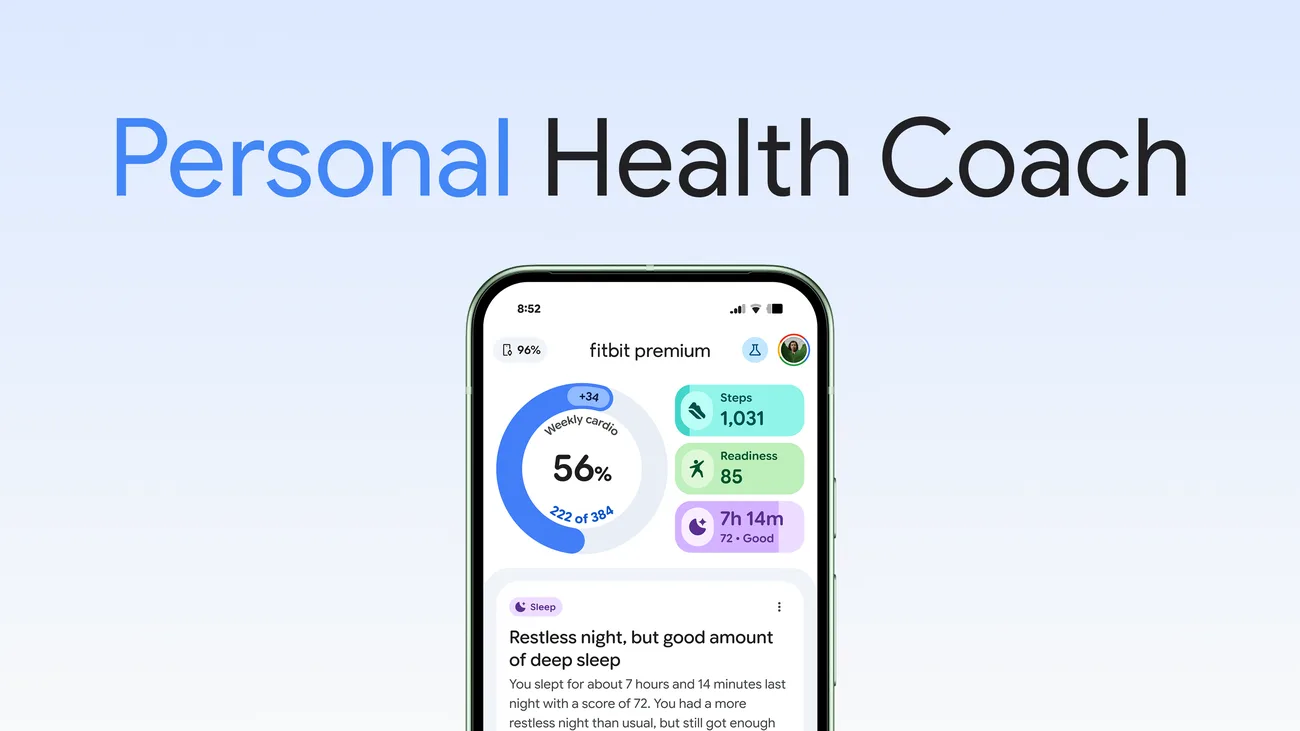
AI is smart. The question is whether you can trust the system around it: where it gets its information, whose data it reasons from, what happens to your data, and whether anyone checked its accuracy before shipping.
A chatbot that answers health questions is not a health coach. A health coach is a system, grounded in your data, fact-checked against the web, benchmarked for accuracy, and private by design. Most AI health products are chatbots. A few are coaches. Here is how to tell them apart.
The short answer
- Hallucinations and confidently wrong advice are a real, documented problem.
- AI health coaches can still be valuable tools when the system around the model is built correctly.
- The difference is that system: your data, web fact-checking, internal benchmarks, and zero data retention.
- Ness is built around those four things. Here is what each one actually does.
The real risks
Hallucinations and poor advice. A February 2026 study in Communications Medicine benchmarked 22 ChatGPT models on care-seeking advice using real clinical vignettes. Average accuracy was around 70 percent. The best model hit 74 percent. There was no improvement across newer releases, and the models consistently overtriaged, telling people to seek more urgent care than the case required.
Grok is the cautionary tale on the other end. Clinicians testing it found it mistook a textbook case of tuberculosis for a herniated disk, and mistook a benign breast cyst mammogram for an image of testicles. Grok is not HIPAA-bound, and when Elon Musk encouraged users to upload medical data for a "second opinion," Grok itself replied in the same thread that it is "not a medical professional or HIPAA compliant" and recommended against sharing sensitive information. Even the model tells you not to trust it for health.
Confidently wrong. These models do not hedge when they should. A hallucinated answer arrives with the same certainty as a correct one, and a health context is the worst place for that failure mode.
Missing personal context. A general chatbot answers from a blank slate. It does not know what you ate last night, how you slept, or whether your recovery has been trending down for a week. Generic advice is not coaching.
Data retention and privacy. Many apps do not prioritize it. Your health questions, your logs, and your name can end up stored, used for training, or attached to an account. The model is only half the trust question. The data pipeline is the other half.
Why the answer is not "never trust AI"
It would be easy to read those risks and conclude AI health coaches are not ready. That is the wrong conclusion.
When it is built correctly, an AI health coach is valuable in ways a human coach cannot match. It is always available, at 3 a.m. or 3 p.m. and with no appointment. It has memory, so it remembers your meals, your sleep, and your recovery across weeks rather than just the last message. It also connects domains a single-purpose tracker cannot: nutrition to recovery, sleep to strain, stress to energy. A coach that sees your food log and your recovery score together can tell you that last night's late dinner is why you feel flat today, and what to eat instead.
The value is real. The risk is in the implementation, not the concept. The useful question is not whether to trust AI health coaches. It is what a trustworthy one looks like.
What "implemented correctly" looks like
Four things separate a trustworthy coach from a chatbot with a health tab.
- Grounded in your actual data. It reasons from your meals, sleep, and recovery instead of a blank slate.
- Web fact-checking. It can search the web to verify relevant information instead of relying on training data alone.
- Internal benchmarks. The maker measures accuracy and hallucination rates before shipping, and can tell you the numbers.
- Zero data retention and stripped personal details. Your queries are anonymized, your name is removed, and providers retain nothing.
How Ness does each
Ness is an AI health coach for iPhone and Apple Watch. All four safeguards are built into the product rather than bolted on.
Grounded in your data. Ness reads Apple Health and turns your data into six daily scores: Health, Sleep, Recovery, Strain, Stress, and Energy. The scores are computed on-device, so the numbers never leave your phone. Its AI coach reasons from your meals, your sleep, and your recovery. Ask why you feel off this morning and the answer is built on your log, not a generic paragraph.
Web fact-checking. The coach has web search, so it can verify relevant information rather than answer from memory alone.
Benchmarked accuracy. Ness runs an internal health-coaching benchmark, HCBenchv1, and publishes the numbers. Ness Pro scores 93.6% and Fast 81.5%, ahead of the general-purpose models:
| System | HCBenchv1 |
|---|---|
| Ness Pro | 93.6% |
| Claude Sonnet 5 | 86.6% |
| Claude Haiku 4.5 | 85.0% |
| GPT-5.6 Sol | 84.0% |
| Grok 4 | 83.9% |
| Ness Fast | 81.5% |
| Gemini 3.6 Flash | 81.3% |
Zero data retention, stripped personal details. AI features send anonymized queries to zero-data-retention providers, and Ness strips personal details like your name from the request before it leaves your phone. The AI queries are the only data that leaves the device, and they carry no identity and leave no stored copy.
Ness is not a medical device. It is a coach, not a diagnosis, and it is built to stay in that lane.
A checklist for evaluating any AI health coach
Run any AI health product through these five questions before you trust it with your health.
- Does it read your actual data, or answer from a blank slate? A coach that has never seen your sleep or meals is a chatbot.
- Does it fact-check with web search? If it cannot verify, it is guessing from training data.
- Does it benchmark accuracy, and will it show you the numbers? "Our AI is accurate" without a number is marketing.
- What happens to your data? Look for on-device processing, zero retention, anonymization, and stripped personal details.
- Does it tell you when to see a doctor? A trustworthy coach knows its limits and says so.
The bottom line
Trust is a property of the system, not the model. A smart model with no grounding, no fact-checking, and unclear data handling is a chatbot with a health tab. A coach built around your data, web verification, benchmarks, and zero retention is a tool you can actually use every day.
The risks are real and manageable. The fix is to pick a coach that was built like one, and to keep a physician in the loop for anything that looks like a symptom.
Sources
- Kopka M, He L, Feufel M A. Evaluating the accuracy of ChatGPT model versions for giving care-seeking advice. Communications Medicine, February 25, 2026. https://doi.org/10.1038/s43856-026-01466-0. 22 ChatGPT models, ~70% average accuracy, 74% best, no improvement across releases, and a tendency to overtriage.
- Rogelberg S. Elon Musk asked people to upload their medical data to X so his AI company could learn to interpret MRIs and CT scans. Fortune, January 11, 2026. https://fortune.com/2026/01/11/why-did-elon-musk-ask-x-users-upload-medical-data-grok/. Grok is not HIPAA-bound, and the article covers the accuracy errors and privacy concerns.
- Whitfill Roeloffs M. Elon Musk Keeps Telling People To Use AI For Medical Advice, But Grok Says Not To. Forbes, February 19, 2026. https://www.forbesafrica.com/current-affairs/2026/02/19/elon-musk-keeps-telling-people-to-use-ai-for-medical-advice-but-grok-says-not-to. Grok itself disclaimed medical advice and HIPAA compliance.
- Fox A. Elon Musk suggests Grok AI has a role in healthcare. Healthcare IT News. https://www.healthcareitnews.com/news/elon-musk-suggests-grok-ai-has-role-healthcare. The tuberculosis case mistaken for a herniated disk and the mammogram errors.
- Ness. HCBenchv1. Internal health-coaching evaluation. Ness Pro 93.6%, Fast 81.5%, ahead of Claude Sonnet 5 (86.6%), GPT-5.6 Sol (84.0%), Grok 4 (83.9%), Gemini 3.6 Flash (81.3%). In-progress internal benchmark, not a published study.
Nothing here is medical advice. Health apps and wellness scores are tools, not diagnoses; if you have symptoms or a health condition, see a physician.