Blog · August 6, 2026 · 13 min read
Apple Quietly Killed Its AI Health Coach: The 3 Best Apple Watch Alternatives
Bloomberg reports Apple wound down Project Mulberry, its Health+ AI coach, after three years of delays. What happened, what is still coming, and the best AI health coaches for Apple Watch users today.
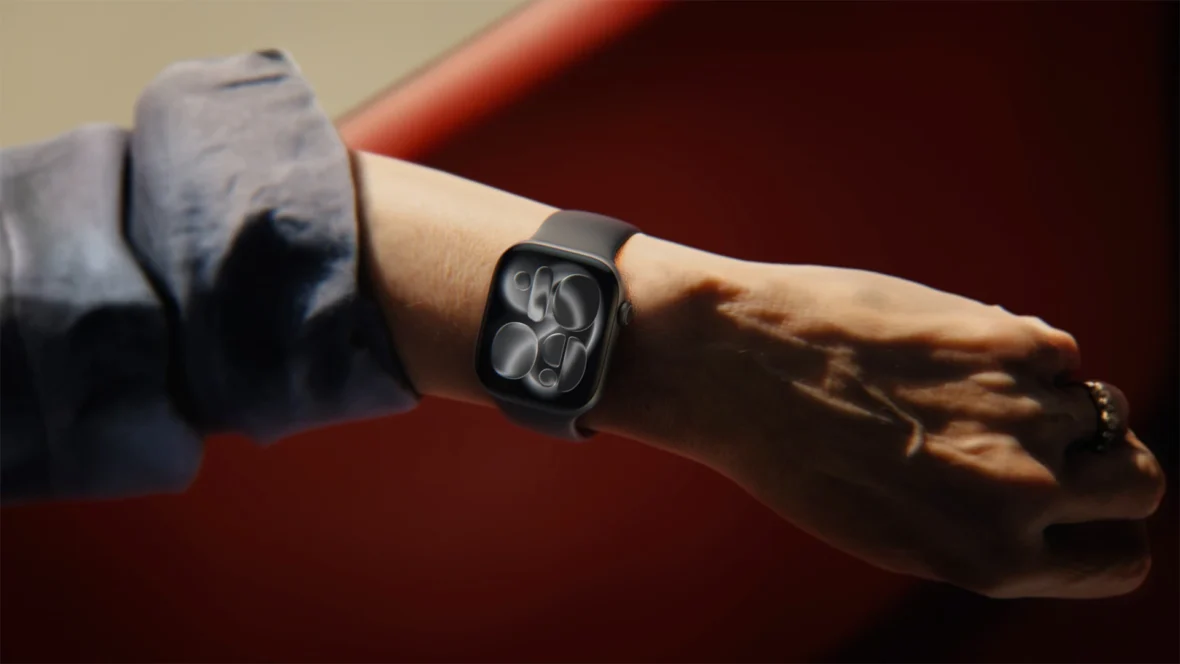
Apple spent three years building an AI health coach around your Apple Watch data, and on February 5, 2026, Bloomberg reported that the project — codenamed Mulberry and known to the outside world as Health+ — had been quietly wound down. The coach was never announced publicly, and at WWDC 2026 in June, Apple showed off a redesigned Health app with no AI coach anywhere in it. MacRumors' running tracker of iOS 27 health features now describes the service as "scrapped well before the iOS 27 beta came out," with features trickling into the Health app individually instead.
If you were waiting for Apple to turn the Health app into something that actually coaches you, here is what happened, what is still coming, and what you can use right now.
What Apple was building
The idea goes back to an April 2023 Bloomberg scoop: a paid coaching service codenamed Quartz that would "use AI and data from an Apple Watch to make suggestions and create coaching programs" for exercise, sleep, and eating habits. The Verge's coverage noted it was planned for 2024 with a monthly fee attached, and that Apple never commented publicly — which never changed.
By March 2025 the project had a new codename and much bigger ambitions. Bloomberg's Mark Gurman reported on Project Mulberry: a revamped Health app with an AI agent meant to somewhat "replicate" your doctor, drawing on Apple Watch and Health app data, with a new emphasis on food tracking. Apple was training the agent on data from staff physicians, building a studio near Oakland to film educational videos with outside experts in sleep, nutrition, physical therapy, mental health, and cardiology, and hunting for a "major doctor personality" to host the service, tentatively called Health+. Target launch: iOS 26.4, spring or summer 2026. (TechCrunch, Engadget, AppleInsider)
One naming detail worth knowing: reports in March 2025 said the target was "iOS 19.4." Apple then switched to year-based version numbers at WWDC 2025, so that same target is what we now call iOS 26.4.
How it slipped: the timeline
- April 2023 — Quartz revealed, planned for 2024. Bloomberg noted even then that it "could ultimately be canceled or postponed."
- March 2025 — Mulberry and Health+ revealed, targeting a spring/summer 2026 launch inside a redesigned Health app.
- June 2025 — WWDC 2025: Apple announces Workout Buddy, an Apple Intelligence feature that gives spoken motivation mid-workout — its first AI coaching of anything. No Health+ coach. watchOS 26 shipped that September with Workout Buddy and a new sleep score.
- October 2025 — Bloomberg reports a reorganization: longtime COO Jeff Williams is departing, Services chief Eddy Cue takes over the health and fitness teams, and watchOS moves to Craig Federighi's group.
- February 2026 — Bloomberg reports Mulberry "was wound down in recent weeks," with planned features to be rolled into the existing Health app individually instead.
- May 2026 — Gurman reports the coach features may not land until "later in the iOS 27 update cycle," and says the pause happened because Apple felt its offering "wasn't quite competitive with other health subscriptions."
- June 2026 — WWDC 2026: Apple announces iOS 27 and Siri AI with a redesigned Health app — and no health coach. iOS 27 ships to everyone this September.
Three years of a paid AI coach being perpetually one or two releases away, and the distance kept growing.
Why Apple pulled back
The reporting points to a leadership verdict, not a technical failure. Cue told colleagues Apple "needs to move faster and be more competitive in health," and said newer rivals — Bloomberg names Oura and Whoop — "offer more compelling and useful features, particularly through their iPhone apps." He did not think Apple's own plan met that bar. (9to5Mac's summary of the Bloomberg report)
There was also churn on the AI side: Apple's AI chief John Giannandrea announced he would step down in spring 2026, with much of his organization folding into Federighi's software group. And the regulatory math of shipping an AI that gives health advice to hundreds of millions of people was never going to be simple for a company whose brand is built on caution. Apple will instead ship the pieces one at a time: the doctor-led videos, gait analysis via the iPhone camera, and Siri health answers in iOS 27, all inside the free Health app. (Macworld)
That leaves the Apple Watch in a strange spot. The hardware is years ahead of the software: the watch already captures HRV, resting heart rate, sleep stages, blood oxygen, respiratory rate, and wrist temperature. The Health app stores all of it and interprets almost none of it. watchOS 27, per 9to5Mac, even improves the heart-rate engine — better raw data ending at the same dead end: charts, not coaching.
Everyone else shipped
While Apple rescheduled, the rest of the industry launched:
- WHOOP shipped WHOOP Coach, powered by OpenAI's GPT-4, back in September 2023 — coaching grounded in your own recovery, strain, and sleep data, run through a zero-data-retention arrangement with OpenAI.
- Oura launched the Oura Advisor in July 2024, an LLM assistant that builds persistent "memories" about you.
- OpenAI announced ChatGPT Health on January 7, 2026 — connecting Apple Health and medical records — and rolled it out to all US users on July 23, 2026, with 300 million health questions asked on ChatGPT every week.
- Google made its Gemini-powered Google Health Coach globally available on May 19, 2026, as part of Google Health Premium ($9.99/month or $99/year), replacing the Fitbit app with the new Google Health app. (TechCrunch, 9to5Google)
The companies racing hardest on AI health — Google and OpenAI — both have a live AI health coach connected to real health data today. Apple, meanwhile, shipped a redesigned Health app with nicer cards, plus the one concrete descendant of Mulberry's plans so far: Visual Intelligence nutrition, built into the Camera app's new Siri mode in iOS 27. Photograph a food item and it tells you whether it's heavily processed, whether it has protein, and whether it's high in sugar, assigning a nutritional-value ranking between "very low" and "very high." It does not give exact calorie counts, the data never syncs to the Health app, and it requires an iPhone 15 Pro or later. A quality label on a photo — not a food log, and not a coach.
The coach is still absent.
The 3 best Apple Watch alternatives right now
#1 Ness — the closest thing to what Health+ promised
Ness turns the data your Apple Watch already collects into six daily scores — Health, Sleep, Recovery, Strain, Stress, and Energy — computed on your iPhone. It centers on the two things Mulberry was supposed to do: coaching and food. Log a meal by photo, voice, barcode, or text search and Ness returns per-ingredient calories, macros, micronutrients, and amino acids. The AI coach reads your food log alongside your sleep and recovery, has memory and web search, and can answer why you felt off this morning using both halves of the picture instead of one.
Scores are computed on-device. AI features send only anonymized data to zero-data-retention providers — the same privacy architecture WHOOP used for its coach. $12.99/month or $79.99/year, on the App Store. Where Ness is thinner: it is iPhone and Apple Watch only (Fitbit syncs in via Apple Health), and it does not do strength training plans or lab imports.
#2 Bevel — the broadest feature set, at the highest price
Bevel is the most ambitious all-rounder. Recovery, Sleep, Strain, Stress, and Energy Bank scores, plus Strength Builder with 700+ exercises, Health Records for labs and bloodwork, Biological Age, Cycle Tracking, a journal, and solid nutrition tracking (barcode, photo, recipe, or text against a 6-million-food database, with optional glucose tracking). The free tier is genuinely usable — core scores, nutrition logging, and strength training are all included.
The catch is that the coach, Bevel Intelligence, sits behind Pro at $14.99/month or $99.99/year — the most expensive option in this list — subject to a weekly usage allowance. One independent review concluded the dashboard is stronger than the AI coach. 4.8 stars across 14K US App Store ratings. If you want one app for labs, lifting, and scores, and price is secondary, Bevel is the pick.
#3 Livity — thorough dashboards, lighter coaching
Livity is the privacy-first dashboard: every score is calculated locally — "your health data never leaves your phone" — with Recovery, Sleep, Strain, Stress, Energy Level, Training Readiness, Fitness Age, blood pressure analysis, Blood Reports for lab results, and 100+ badges. Its standout trick is wearable reach: as of version 5.0 it reads Garmin, Fitbit, and Oura alongside the Apple Watch, the only app in this list that does.
The trade-offs: there is no native food logging, and its AI coach stays surface-level compared with coaches built around your full data. And if you wear an Apple Watch only, the multi-wearable advantage does nothing for you. $12.99/month or $79.99/year, with weekly and one-time-purchase tiers also listed in the US store; 4.7 stars across 949 ratings.
At a glance

| Ness | Bevel | Livity | |
|---|---|---|---|
| Daily scores | Health, Sleep, Recovery, Strain, Stress, Energy | Recovery, Sleep, Strain, Stress, Energy Bank | Recovery, Sleep, Strain, Stress, Energy |
| AI coach | Yes — memory, web search, reads food + recovery | Bevel Intelligence (Pro) | Yes, surface-level |
| Nutrition logging | Photo, voice, barcode, search — per ingredient | Barcode, photo, recipe, search (6M+ foods) | No native logging |
| Score computation | On-device; AI via anonymized, zero-retention providers | Cloud, account required | On-device |
| Other wearables | Fitbit (via Apple Health) | Bluetooth HR sensors | Garmin, Fitbit, Oura |
| Price | $12.99/mo or $79.99/yr | Free tier; Pro $14.99/mo or $99.99/yr | $9.99/mo or $79.99/yr (weekly, one-time too) |
How to choose
- You want the coaching plus nutrition that the Apple service promised → Ness
- You want labs, strength training, and biological age in one app → Bevel
- You wear a Garmin, Oura, or Fitbit alongside the Apple Watch → Livity
- You want a free dashboard first and a coach later → Bevel's free tier
- On-device computation matters most → Livity; or Ness, with scores on-device and anonymized AI
What Apple might still ship
The project is paused, not cremated. Bloomberg's February report says the Oakland-produced videos will be "repurposed and introduced as early as this year," gait analysis remains in development, an AI chatbot drawing on Apple's "World Knowledge Answers" system is in the works, and iOS 27's new Siri is meant to handle "more advanced health-related queries." The coach itself is penciled in for "later in the iOS 27 update cycle" — anywhere from iOS 27.1 in October to iOS 27.4 next spring — if it ships at all.
Our advice: do not plan your health around a product Apple has never acknowledged and that reporting shows slipping from 2024 to 2026 and beyond. The watch on your wrist produces the data today; every app above reads that exact same stream.
FAQ
Did Apple cancel its AI health coach? Not officially — Apple never announced it. Bloomberg reported in February 2026 that the project was "wound down," with planned features trickling into the Health app individually. "Killed" is the fair headline verb: the coach as one product is gone for now, while the pieces survive.
Are Quartz and Mulberry the same thing? Related, not identical. Quartz (2023) was the original paid coaching-service plan. Mulberry (2025–2026) was the bigger relaunch: an AI agent inside a revamped Health app, with expert videos, under the working name Health+. Coverage often confuses the two codenames.
Will Apple still launch Health+? Maybe. Bloomberg's May 2026 reporting suggests coach features may arrive later in the iOS 27 update cycle, in reduced scope. There is no date, and Apple has never acknowledged the service exists.
Does the Apple Watch have a recovery score? No. The Health app and the Vitals app show charts and flag outliers, and the watchOS sleep score grades your night. Nothing combines those signals into a "can I train today" answer — third-party apps compute that from the same sensor data.
Are these apps medical devices? No. They are wellness tools for understanding your own data, not for diagnosing, treating, or preventing any condition.
The bottom line
The Apple Watch is the best-selling smartwatch on earth, and for now the company that makes it has decided not to tell you what the data means. Workout Buddy talks to you during a run; it does not know what you ate or how recovered you are. If you want a coach that reads your Watch data and your food together, that job currently belongs to third parties — and the one that does it with the most context is Ness, for $79.99 a year on hardware you already own.
Nothing here is medical advice. Recovery scores, sleep data, and AI coaching are wellness tools; consult a physician about any health condition or before changing your exercise or diet based on app output.
Sources
- Mark Gurman, Apple Is Scaling Back Plans for New AI-Based Health Coach Service — Bloomberg, February 5, 2026
- Mark Gurman, Apple Developing AI Health Coaching Service, iPadOS 17 Health App — Bloomberg, April 25, 2023
- Jay Peters, Apple is reportedly building a paid AI health coach — The Verge, April 25, 2023
- Anthony Ha, Apple reportedly revamping Health app to add an AI coach — TechCrunch, March 30, 2025
- Cheyenne MacDonald, Apple is said to be developing a revamped Health app with a built-in AI doctor — Engadget, March 30, 2025
- AppleInsider, Health app's future AI assistant will tell you how to keep fit — March 30, 2025
- Mark Gurman, Apple to Move Health, Fitness Divisions to Services in Reorganization — Bloomberg, October 10, 2025
- Ryan Christoffel, Apple reportedly scales back plans for AI-powered health coach — 9to5Mac, February 5, 2026
- Jason Cross, Apple's AI-powered health service is reportedly on life support — Macworld, February 6, 2026
- David Snow, Apple shifts AI health coach plans to new focus — Cult of Mac, February 2026
- AppleInsider, Apple Health+ scaled back internally, will focus on incremental features — February 6, 2026
- Michael Burkhardt, Report: watchOS 27 to improve heart-rate tracking; AI health coach may not debut at launch — 9to5Mac, May 24, 2026
- Apple, watchOS 26 delivers more personalized ways to stay active and connected — June 9, 2025
- Apple, Apple unveils next generation of Apple Intelligence, Siri AI, and more — June 8, 2026
- Juli Clover, iOS 27: All the New Health and Fitness Features — MacRumors, August 4, 2026
- WHOOP, WHOOP Unveils the New WHOOP Coach Powered by OpenAI — September 26, 2023
- Wareable, Whoop launches GPT-4 AI coach — September 2023
- Joe Lemire, Ōura launches generative AI-powered assistant called Oura Advisor — Sports Business Journal, July 9, 2024
- OpenAI, Introducing ChatGPT Health — January 7, 2026
- Ivan Mehta, OpenAI makes ChatGPT Health available to all US users — TechCrunch, July 23, 2026
- Google, Google Health Coach is becoming globally available — May 7, 2026
- Sarah Perez, Google's $9.99-per-month AI health coach launches May 19 — TechCrunch, May 7, 2026
- Bevel, Membership & Pricing and the Bevel App Store listing
- Livity on the App Store