
Blog · September 12, 2026 · 6 min read
CGM Without Diabetes: Is a Glucose Monitor Worth Wearing?
Stelo and Lingo made glucose monitors available over the counter. What a CGM actually shows if you don't have diabetes, what glucose spikes mean, and when the experiment is worth it.
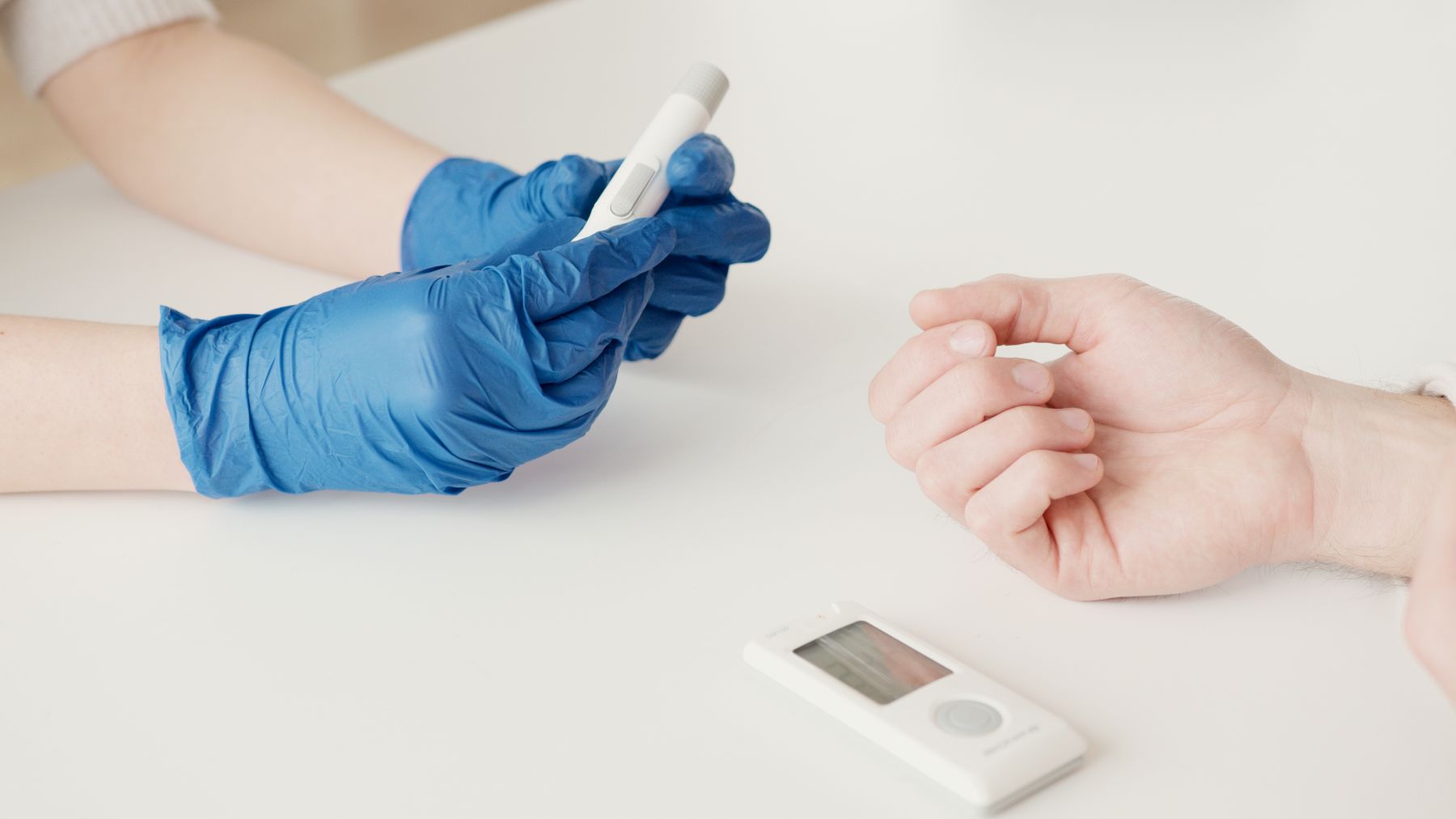
Here is the short version: a CGM is a two-week science experiment on your own meals, and a good one, as long as you know what the line cannot tell you. Glucose spikes after food are normal, even in healthy people. If a sensor changes what you eat for the better, it paid for itself. If it just gives you a new number to worry about, skip it.
The short answer
- Two over-the-counter CGMs now exist in the US without a prescription: Dexcom's Stelo (about $99 for 30 days, or $89 a month on subscription) and Abbott's Lingo (plans from about $49 for a two-week sensor).
- Healthy people spike after meals. A 2018 Stanford study found that even people with normal lab results spent hours a day above glucose ranges usually treated as warning signs.
- The useful part: which meals spike you, what a post-meal walk does, and how a bad night of sleep shows up in your glucose the next day.
- The hype: a CGM is not a diagnostic tool, it measures one input among many, and professional guidelines are built for people with diabetes, not healthy adults.
What these sensors are
A CGM is a hair-thin filament under your skin that reads glucose every few minutes for about two weeks. Until 2024 you needed a prescription. Then the FDA cleared the first over-the-counter versions, and two are on the market:
- Dexcom Stelo. Cleared for adults 18 and over who do not use insulin. A two-pack covering about 30 days costs about $99, or $89 a month on subscription. It syncs with Apple Health.
- Abbott Lingo. Abbott's consumer version of the FreeStyle Libre, with the same two-week wear and coaching built into the app. Plans start around $49.
Both are positioned as wellness products. Neither replaces the prescription CGMs that people with diabetes rely on, and neither is a medical test.
What the data actually shows
The surprise from research on healthy volunteers is how spiky "normal" is. A Stanford team put CGMs on people with normal glucose tolerance and found they split into distinct patterns the researchers called "glucotypes," with many participants spending real time above glucose levels usually flagged as risky, depending mostly on what and when they ate.
The takeaway is not that healthy people are secretly sick. It is that a glucose line moves a lot, and most of that movement is normal. If you treat every spike as a failure, you will be anxious after a perfectly ordinary breakfast. A rise after a meal is what metabolism does.
What a CGM is good for
Used as a short experiment, the sensor answers questions other tools cannot:
- Meal experiments. Eat white rice one day and rice with chicken and vegetables the next, then compare. Pairing carbs with protein, fiber, and fat usually flattens the curve. So does eating vegetables first.
- The post-meal walk. Ten to fifteen minutes of walking after eating pulls glucose into muscle. Seeing it work once is worth a month of lectures about it.
- Sleep. A short or late night shows up in next-day glucose. If you needed one more reason to fix sleep, the sensor will find it.
- Your own worst offender. Everyone has a food that spikes them more than it should. You only find yours by wearing the sensor.
Two to four weeks captures all of it. After that, the line repeats itself and the monthly fee stops buying you anything new.
What it cannot do
- It is not a diagnosis. A CGM cannot detect diabetes or prediabetes. That takes an A1c or fasting glucose test from a lab, and A1c is a three-month average no consumer sensor provides.
- Sensors drift. Consumer CGMs can misread by 15 percent or more, especially during fast changes. One high reading is noise. A repeated pattern is a pattern.
- It measures one input. Glucose responds to sleep, stress, exercise, meal timing, and hydration together. A spike tells you something happened, not which thing caused it, or whether it was bad.
- Guidelines have not caught up. Professional guidance, including the American Diabetes Association's standards, is built around people with diabetes or prediabetes. For everyone else, a 2022 review concluded the idea is promising for changing behavior and still unproven for changing health.
- Worry is a real failure mode. Sleep researchers call it orthosomnia when tracker data starts hurting sleep. Glucose has the same trap. If the line makes you eat worse or sleep worse, the tool has failed.
The smarter stack
If the point is eating better, the sensor is optional. A photo-based food log like Ness records what you ate with per-ingredient detail, tracks micronutrients no CGM can see, and connects meals to your sleep and recovery scores, at $12.99/month or $79.99/year. The strongest setup pairs the two: a CGM for one month to learn your patterns, a food log to keep them.
FAQ
Do glucose spikes mean I have diabetes? No. Spikes after meals are normal. Diabetes is a lab diagnosis based on fasting glucose, A1c, or an oral glucose tolerance test.
Stelo or Lingo? Stelo wears up to 15 days per sensor and syncs with Apple Health. Lingo's plans start cheaper. Both work fine for a one-month experiment.
Can I use a CGM with my Apple Watch? The sensor reads your arm, the app lives on your iPhone, and glucose data lands in Apple Health. There is no watch face reading.
How long should I wear one? Two to four weeks. Long enough to test your usual meals and a few changes, short enough to stay curious.
Related reading
- Photo Food Logging: How AI Calorie Tracking Works
- The Best Micronutrient and Amino Acid Tracking Apps in 2026
- Apple Watch Sleep Score: What's Good, What It Misses, and How to Use It
Sources
- Hall H, Perelman D, Palchiyil A, et al. Glucotypes reveal new patterns of glucose dysregulation. PLOS Biology, 2018.
- Klonoff DC, Nguyen KT, Xu NY, et al. Use of Continuous Glucose Monitors by People Without Diabetes: An Idea Whose Time Has Come? Journal of Diabetes Science and Technology, 2023.
- Dexcom. Stelo: the first FDA-cleared glucose biosensor offered without a prescription. Pricing and wear time.
- Abbott. Lingo. Consumer CGM plans and Apple Health sync.
- GoodRx. Over-the-Counter Continuous Glucose Monitoring FAQs. Stelo and Lingo pricing comparison.
Nothing here is medical advice. If you suspect diabetes or prediabetes, ask your doctor for a glucose test rather than a sensor.