Blog · September 16, 2026 · 13 min read
10 Hidden Apple Watch Features You Didn't Know About
The best hidden Apple Watch features in 2026, from the Series 12 readiness score to watchOS 27 tap gestures, with the exact tap path to find each one.
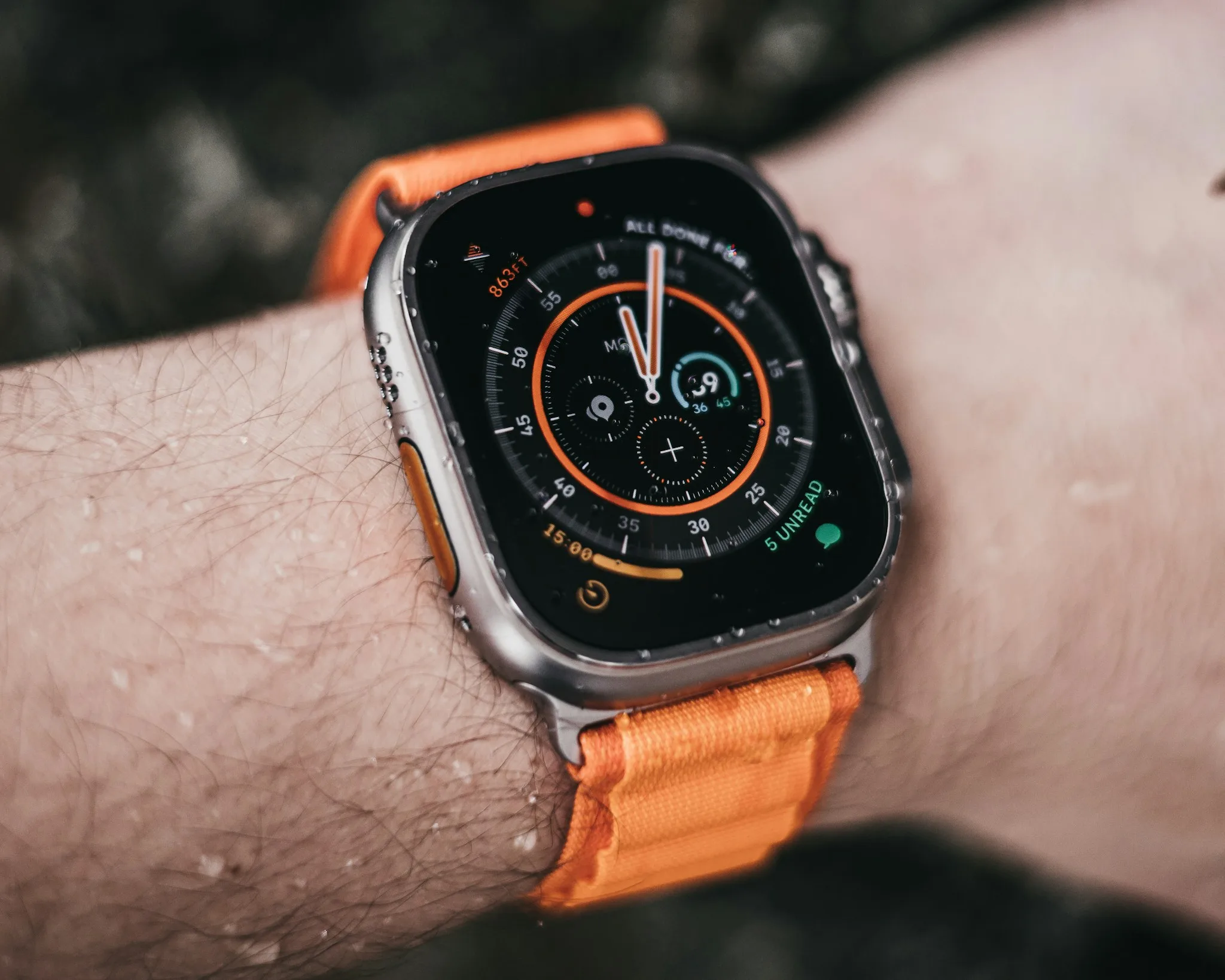
Most lists of hidden Apple Watch features were written in 2024 or 2025. They are out of date. Apple announced the Series 12 on September 9, 2026, and it ships September 18. watchOS 27 lands on September 14. Both add features that older lists do not even mention.
The best hidden Apple Watch features in 2026 are the Series 12 readiness score, dual HRV tracking with 5-second heart rate sampling, the Sleep Score breakdown in the Sleep app, Training Load, the new one-handed tap gesture in watchOS 27, hypertension notifications, perimenopause and menopause support in Cycle Tracking, heart rate zones during workouts, sleep apnea notifications, and Backtrack in the Compass app.
Some of these are genuinely buried. Others sit in plain sight on screens you scroll past daily. Apple rarely explains the tap path, so most owners never find them. Here is each one, what it does, exactly where to tap, and why it matters.
The short answer
- Readiness score. A 0-10 daily score that tells you to Recover, Pace Yourself, get Ready, or Go For It. Series 12 and Ultra 4 only.
- Dual HRV and 5-second heart rate. Series 12 samples your heart rate every 5 seconds and splits HRV into Recovery and overall views.
- Sleep Score details. A 0-100 score with a points breakdown hiding inside the Sleep app.
- Training Load. Compares your last 7 days of workouts to the previous 28 so you can spot overtraining.
- Backtrack. The Compass app can record your hiking route and walk you back to where you started.
1. The Readiness score Apple hides on new watches
The readiness score is the headline feature of the Series 12, and it is the most gated. It crunches your recent activity, training load, vitals, and sleep score into a single number from 0 to 10. It updates through the day, so a hard morning workout or a shift in your daytime vitals moves it. Each score comes with one plain recommendation: Recover, Pace Yourself, Ready, or Go For It.
How to find it: The readiness score is exclusive to Apple Watch Series 12 and Apple Watch Ultra 4. It appears in the new Heart Rate and vitals views, with a watch face complication for a glance, and in the redesigned Health app on iPhone when it ships later this year. If you have a Series 11 or older, you will not find it anywhere. The feature does not exist on those watches, no matter what you update.
Why it matters: Apple built the scoring model on data from the Apple Heart and Movement Study, with its own exercise scientists and physicians. That is coach-grade recovery guidance, and it has become the biggest reason runners and lifters are upgrading.
2. Dual HRV variants and 5-second heart rate sampling
The Series 12 has a new Health Sensing System. The optical heart sensor now measures your heart rate every 5 seconds, all day long. Apple says that is about 60 times more background readings than the Series 11. HRV (heart rate variability, a key signal of stress and recovery) is measured up to 24 times more often.
The part almost nobody notices: the watch now tracks two separate HRV variants. Recovery HRV is best for daily stress and recovery signals. Overall HRV is better for long-term health, including cardiovascular health. Higher variability generally means better recovery; lower values point to stress. Both live in a new section of the Heart Rate app, and overnight vitals now includes Recovery HRV measured against your personal baseline. A new daytime vitals view lets you toggle between overnight and daytime metrics.
How to find it: Open the Heart Rate app on a Series 12 or Ultra 4 and scroll to the new HRV section. Tap through to see Recovery HRV versus overall HRV. The real-time heart rate also shows on a new watch face complication.
Why it matters: More data points mean your recovery trends stop being one noisy overnight snapshot. You can spot a bad day early.
3. Sleep Score details in the Sleep app
Apple added a Sleep Score in watchOS 26, and it still flies under the radar because it hides inside an app most people only open to check an alarm. The score runs 0 to 100 and shows up every morning after you wake.
How to find it: Open the Sleep app on your Apple Watch, then tap the info icon next to your score for the full breakdown. On iPhone, open the Health app, tap Search, then tap Sleep. The math: sleep duration is worth 50 points, bedtime consistency 30, and interruptions 20. Consistency looks at when you fell asleep over the last 13 nights. Your score gets a label: Very Low (0-40), Low (41-60), OK (61-80), High (81-95), or Very High (96+). Wear the watch at least 1 hour overnight and charge it to at least 30 percent before bed for data to count.
Why it matters: The breakdown tells you what to fix. A high duration score with a low consistency score means your problem is bedtime, not bedtime length.
4. Training Load and the new workout views
Training Load arrived in watchOS 11 and remains one of the least-used tools on the watch. It compares the intensity and duration of your workouts over the last 7 days to the previous 28, then labels your current load from well below to well above your normal range.
How to find it: Go to the Activity app on your Apple Watch. Tap the Workload button, then turn the Digital Crown to see your training load over the last 7 days. Tap the number under the graph, then tap any workout for details. You can also filter by workout type, and rating your effort after a cardio workout feeds the model. From the current-day view, tap the Vitals data at the bottom to jump to your overnight vitals.
Why it matters: One hard workout is noise; seven hard ones in a row is an injury risk. Training Load is how you see the difference before your body tells you the hard way.
5. The new tap gesture in watchOS 27
watchOS 27 adds a single-handed tap gesture. Tap your index finger and thumb together once to select a widget in the Smart Stack. Then use the existing double tap gesture (two quick pinches) to scroll through the Smart Stack, all with one hand while your other hand holds coffee, a railing, or a dog leash.
How to find it: The gesture works out of the box on Apple Watch Series 9 or later, Apple Watch SE 3, and Apple Watch Ultra 2 or later. To customize it, open the Settings app on your Apple Watch, tap Tap Gestures, and set Playback to Play/Pause or Skip, or turn gestures off. The same controls are in the iPhone Watch app under My Watch, then Gestures.
Why it matters: Double tap got most of the attention when it launched in 2023, but the one-tap selection in watchOS 27 turns the Smart Stack into a one-handed remote. Almost nobody knows the single tap exists.
6. Hypertension notifications
Apple Watch can analyze 30 days of optical heart sensor data and notify you if it spots patterns consistent with chronic high blood pressure. It runs in 30-day evaluation periods from the day you set it up.
How to find it: On your iPhone, open the Health app, tap your profile icon, tap Health Checklist, then tap Hypertension Notifications and follow the prompts. You need an Apple Watch Series 9 or later or Ultra 2 or later (not SE), an iPhone 11 or later, Wrist Detection on, and you must be 22 or older, not pregnant, and not already diagnosed with hypertension. If you get a notification, Apple prompts you to log your blood pressure with a cuff for 7 days and share the results with your doctor.
Why it matters: High blood pressure usually has no symptoms. This is a passive screen for a condition most people find out about at an urgent care visit. It is a signal to talk to your doctor, not a diagnosis.
7. Perimenopause and menopause in Cycle Tracking
watchOS 27 adds perimenopause and menopause support to Cycle Tracking on Apple Watch and in the Health app on iPhone. If your logged cycle patterns suggest perimenopause, the app can send a notification. You can track related symptoms and read built-in educational resources.
How to find it: Open the Health app on iPhone, go to Cycle Tracking under Browse, and follow the prompts to log cycles and symptoms. Cycle deviation notifications that include perimenopause are for people 40 or older.
Why it matters: Perimenopause can start years before menopause and is often dismissed as stress or poor sleep. It surfaces a pattern most trackers ignore. Apple notes the app should not be used for birth control or to diagnose a condition.
8. Heart rate zones during workouts
Your Apple Watch splits your heart rate into five zones, from a warm-up range up to maximum effort. Most people never set them up, so the watch guesses their zones from age-based estimates.
How to find it: Before a workout, go to the Settings app on your Apple Watch, tap Workout, then Heart Rate Zones. Switch from automatic to Manual, then enter your own lower and upper limits for zones 2, 3, and 4. During a workout, tap through the workout views to see your current zone and time in each one. You can also set zones in the Health app on iPhone under Heart, then Cardio Zones.
Why it matters: Training by zone turns a random jog into a plan. Zone 2 builds endurance; zones 4 and 5 build top-end fitness.
9. Sleep apnea notifications
The Apple Watch uses its accelerometer to track breathing disturbances while you sleep, labeling each night Elevated or Not Elevated. If you show Elevated disturbances over a 30-day evaluation period, with at least 10 nights of wear, you get a notification about signs of moderate to severe sleep apnea.
How to find it: On your iPhone, open the Health app, tap the Browse tab, then tap Respiratory. Under Sleep Apnea Notifications, tap Set Up and follow the prompts. You need an Apple Watch Series 9 or later, Ultra 2 or later, or SE 3, with Track Sleep with Apple Watch turned on. You must be 18 or older and not already diagnosed with sleep apnea. To review your data, go back to Health, tap Browse, then Respiratory, and tap Sleep Apnea Notifications or Breathing Disturbances. You can export a PDF report for your doctor.
Why it matters: Sleep apnea often goes undiagnosed for years. This feature runs in the background every night and asks nothing of you until it sees a pattern worth acting on.
10. Backtrack in the Compass app
Backtrack is the most underused utility on the watch. It records the route you walk on a trail, then draws the path back to your starting point if you get lost.
How to find it: Open the Compass app on your Apple Watch. Tap the Backtrack button, then tap Record Path to start recording. To find your way back, tap the button again and tap Retrace Path. Your route appears on screen with your starting point as a white dot. Tap Delete Path when you are done. On Apple Watch Ultra models, you can start Backtrack with the Action button.
Why it matters: It works without cell service in remote areas, exactly where getting lost is most dangerous. Apple notes it is meant for remote settings, away from dense Wi-Fi areas, and does not account for obstacles or elevation changes, so still carry a map.
FAQ
What are hidden Apple Watch features? Features that exist on your watch but sit behind menus, watch apps, or hardware gates that Apple does not advertise. Sleep Score details, Training Load, and Backtrack have shipped for a year or more, and many owners have never opened them.
Does Apple Watch Series 12 have hidden health features? Yes. The readiness score, the dual HRV variants, 5-second heart rate sampling, and the new daytime vitals view are all exclusive to the Series 12 and Ultra 4. The Series 12 starts at $399 and began shipping September 18, 2026.
How do I find hidden features on watchOS 27? Start with three places: Settings on the watch (tap gestures, heart rate zones), the Health app on iPhone (Health Checklist for hypertension and sleep apnea notifications, Respiratory, Cycle Tracking), and the Activity app (the Workload button). watchOS 27 is available September 14 on Apple Watch Series 9 or later, SE 3, and Ultra 2 or later, and requires an iPhone 11 or later with iOS 27.
Do these features work on older Apple Watches? Some do, some do not. Sleep Score, Training Load, heart rate zones, Backtrack, hypertension notifications, sleep apnea notifications, and the tap gestures all work on a Series 9 or later, with the model exceptions noted above. The readiness score, dual HRV, and 5-second sampling are hardware-gated to Series 12 and Ultra 4.
Is the readiness score on all Apple Watches? No. It is exclusive to Apple Watch Series 12 and Apple Watch Ultra 4. Even a Series 11 running watchOS 27 does not have it, which has frustrated some owners. Third-party apps can estimate readiness on any recent watch using heart rate variability, sleep, and training data.
Sources
- Apple Newsroom, "Introducing Apple Watch Series 12, with the all-new Health Sensing System" — https://www.apple.com/newsroom/2026/09/introducing-apple-watch-series-12-with-the-all-new-health-sensing-system/
- Apple, watchOS 27 overview — https://www.apple.com/os/watchos/
- Apple Support, "Hypertension notifications on your Apple Watch" — https://support.apple.com/en-us/117296
- Apple Support, "Sleep apnea notifications on your Apple Watch" — https://support.apple.com/en-us/120031
- Apple Watch User Guide, "View your sleep score on Apple Watch" — https://support.apple.com/guide/watch/view-your-sleep-score-apded441a669/watchos
- Apple Watch User Guide, "Track your training load on Apple Watch" — https://support.apple.com/guide/watch/track-your-training-load-apde4c07a6cf/watchos
- Apple Watch User Guide, "Use tap gestures on Apple Watch" — https://support.apple.com/guide/watch/use-tap-gestures-apdabb7b275c/watchos
- Apple Watch User Guide, "Use Backtrack to retrace your steps on Apple Watch" — https://support.apple.com/guide/watch/use-backtrack-to-retrace-your-steps-apd25bfcec3f/watchos
- Apple Support, "Track your sleep on Apple Watch and use Sleep on iPhone" — https://support.apple.com/en-us/108906
Related reading
- watchOS 27 health features: what's actually new
- How Apple's readiness models work
- Apple Sleep Score explained
- Heart rate zones on Apple Watch
- Tracking perimenopause with Apple Watch
Apple puts its best scores behind its newest hardware. The readiness score needs a Series 12 or Ultra 4, and the dual HRV views need them too. If you bought a watch last year, or three years ago, Apple's answer is to buy a new one.
Ness takes a different view. Ness is a health-score and AI health coach app for iPhone that works with your Apple Watch data. It brings coach-grade recovery and readiness scores to any recent Apple Watch, not just the one released this month. It reads your heart rate, HRV, sleep, and training load, then turns them into a daily score and plain-English coaching. Ness costs $12.99/month per month or $79.99/year per year. Download it on the App Store: https://apps.apple.com/us/app/ness/id6758977081
Nothing here is medical advice. Health apps and wellness scores are tools, not diagnoses; if you have symptoms or a health condition, see a physician.