
Blog · September 18, 2026 · 11 min read
Whoop vs Luna Band: Is the Subscription Worth It?
Whoop 5.0 costs $199 a year forever; the Luna Band is $149 once. We compare accuracy, features, and three-year cost to see which actually wins.
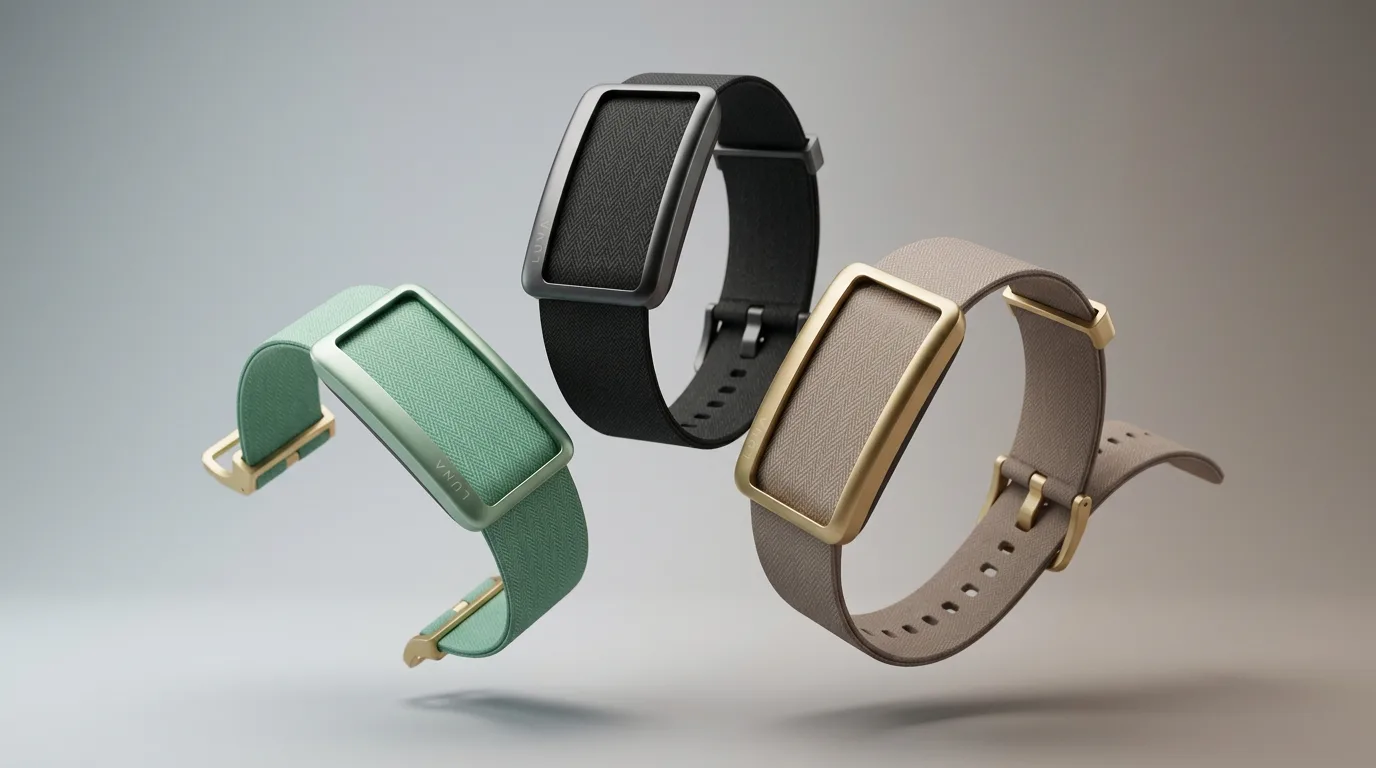
Both of these are screenless bands. Neither has a screen, buttons, or GPS. They sit on your wrist, track your body, and send the numbers to your phone. On paper they look like the same product. They are not, and the difference is money.
The Luna Band wins on cost. It is $149 once, with no subscription. Whoop 5.0 comes with a membership that costs $199 a year, every year, and the band is useless without it. Over three years, Whoop costs about $597 or more. The Luna Band still costs $149. That is the short version. The rest of this post checks whether the Luna Band gives up enough in accuracy or features to make Whoop's subscription worth paying anyway.
The short answer
- Whoop 5.0 is not sold on its own. The device comes bundled with a membership: One at $199/yr, Peak at $239/yr, or Life at $359/yr. Cancel the membership and the band stops working.
- The Luna Band is $149 with no subscription. Its app, LifeOS, is free now, and Luna says no subscription is planned.
- Both track heart rate, HRV, sleep, SpO2, and skin temperature around the clock, and both give you recovery, sleep, and strain-style scores.
- Whoop's battery lasts up to 14 days. The Luna Band lasts up to 10 days. Both beat every smartwatch.
- Over three years, Whoop One costs at least $597. The Luna Band costs $149. If money is the deciding factor, the math is not close.
What does a Whoop membership actually cost?
Whoop changed its model. Older Whoop devices were "free" with a membership. The Whoop 5.0 generation works differently: you pay a yearly membership and the hardware is included.
Here is the current lineup from Whoop's own membership page, checked September 17, 2026:
| Plan | Price | What you get |
|---|---|---|
| One | $199/yr | Whoop 5.0 device, wired charger, Recovery/Sleep/Strain scores, VO2 Max, hormonal insights |
| Peak | $239/yr | Same 5.0 device plus wireless PowerPack, Health Monitor, Stress Monitor, WHOOP age |
| Life | $359/yr | Whoop MG device, ECG, blood pressure insights, heart screener |
All plans include a 14+ day battery claim, a lifetime warranty, and a one-month free trial option with a refurbished 5.0. The key point is not the price tiers. It is this: every plan is a subscription. The band has no screen and no standalone mode. If you stop paying, you are wearing a wristband that does nothing. Whoop says so plainly on its site: the device and the insights are tied to an active membership.
There is one honest upside to this model. Whoop replaces your device if it breaks, for as long as you keep paying. When Whoop ships its next hardware generation, members typically get upgraded hardware as part of the membership instead of buying a new device. You are renting a service that happens to include hardware.
What does the Luna Band cost?
The Luna Band is $149. That is the whole price. It is a screenless wrist tracker from Lunazone, the company behind the Luna Ring. It debuted at CES in January 2026, opened preorders in July, and started shipping at the end of July 2026.
Luna's own FAQ says the Luna app and its LifeOS platform are "completely free for all users," with no subscription now or planned. Luna sells optional protection plans and replacement straps, but there is no required membership.
One honest caveat, which we covered in detail in our Luna Band review: free AI coaching at this price point is unusual because running smart coaching models costs real money per user. Either the coaching is simpler than it sounds, or it changes later. Luna has already hinted it may add some costs down the line. Buy the Luna Band for the hardware value, and treat the "free AI coach" as a bonus that might not stay free.
What does each band measure?
The sensors overlap more than they differ. Both track the same core signals all day and night:
| Metric | Whoop 5.0 | Luna Band |
|---|---|---|
| Heart rate, 24/7 | Yes | Yes |
| HRV (heart rate variability) | Yes | Yes |
| Sleep stages | Yes | Yes |
| SpO2 (blood oxygen) | Yes | Yes |
| Skin temperature | Yes | Yes |
| Respiratory rate | Yes | Yes |
| Steps and activity | Yes | Yes |
| Workout auto-detection | Yes | Yes (running, general cardio) |
| VO2 Max estimate | Yes | No |
| ECG | Life plan only ($359/yr) | No |
| Blood pressure insights | Life plan only | No |
| 70+ metric claims | Yes | Yes |
The Luna Band uses a multi-channel PPG sensor (that is the optical light sensor that reads your pulse through the skin), a 6-axis accelerometer, and a skin temperature sensor. It has no ECG, no onboard GPS, and no blood pressure features. If you want ECG or blood pressure from Whoop, you have to buy the $359/yr Life plan, not the $199 One plan.
How good are the scores: recovery, strain, and sleep?
This is why people buy either band. Whoop's three headline scores are Recovery (how ready your body is, mostly from HRV and resting heart rate), Strain (how much load you put on it today), and Sleep (how well you slept, with a sleep coach that suggests bedtimes). These scores are Whoop's core product. The company has refined them for over a decade, and the coaching is tuned around them. With a membership you also get Whoop Coach, an AI chat that answers questions about your data.
The Luna Band feeds its numbers into LifeOS, an app that turns your signals into a daily plan: when to push, when to rest, when to get sunlight. It sends haptic nudges on your wrist. There is a readiness score and sleep tracking, plus voice logging through Siri on iPhone. The hardware tracks the right signals for recovery-style scores. The difference is maturity. Whoop's scoring has been validated by years of use and independent research partnerships. LifeOS shipped weeks ago, and its most ambitious features, like personalized nutrition plans, are still on the roadmap, not in the app.
So the honest comparison is: Whoop's scores are proven, the Luna Band's scores are promising but new. Neither band is a medical device, and neither score diagnoses anything.
Is the Luna Band as accurate as Whoop?
Both bands use the same kind of sensor: optical PPG for heart rate and HRV, an accelerometer for movement, a temperature sensor. At this level, accuracy differences between wrist bands come mostly from the algorithm, not the sensor. Whoop has more published validation behind its numbers. The Luna Band has less history, so there is less independent evidence either way.
A practical note: the Luna Band syncs to Apple Health. If you want a second opinion on its readings, you can run an app like Ness on the same Apple Health data and compare. Whoop does not sync to Apple Health, so its numbers live in Whoop's own app.
How is the battery?
Whoop claims 14+ days on the 5.0, and that is roughly what reviewers see. The trade is charging: the One plan's basic charger is wired, so you take the band off to charge it. The Peak and Life plans include a wireless PowerPack that charges the band while you wear it.
The Luna Band lasts up to 10 days. That is four fewer days than Whoop claims, but still far better than any smartwatch, and you will likely charge it about three times a month.
Which one costs less over time?
Here is the table that answers the question in the title. It assumes the cheapest Whoop plan (One, $199/yr) and no price increases, which is generous to Whoop.
| Time period | Whoop 5.0 (One, $199/yr) | Luna Band ($149 once) |
|---|---|---|
| Year 1 | $199 | $149 |
| Year 3 | about $597 | $149 |
| Year 5 | about $995 | $149 |
| If you stop paying | Band stops working | Band keeps working |
By year three, Whoop has cost you about $448 more than the Luna Band. By year five, about $846 more. And the Luna Band's number never moves, because there is nothing to renew. Choose Peak or Life and the gap grows to $717 or more by year three.
The counterargument: Whoop's subscription buys hardware upgrades and a lifetime warranty for as long as you pay. The Luna Band is a $149 device you own, and if Lunazone ships a Luna Band 2, you buy it yourself. That is a real trade. But $448 buys a lot of future hardware.
Who should pick which?
- Pick the Luna Band if you want a comfortable screenless tracker, you hate subscriptions, and you accept that its software is young. Ten days of battery, $149 once, and the readings land in Apple Health.
- Pick Whoop if you are a serious trainer who lives by Recovery and Strain scores, you want the most mature coaching ecosystem in the category, and you are fine paying $199 or more every year. The one-month free trial with a refurbished device is a fair way to test it before committing.
- Skip both if you need a screen, GPS, or ECG. You want a smartwatch for that, and our Whoop alternatives for Apple Watch guide covers that path.
FAQ
Does Whoop require a subscription? Yes. Since the Whoop 5.0 launch, every Whoop plan bundles the device with a yearly membership: $199/yr for One, $239/yr for Peak, $359/yr for Life. The band has no screen and no standalone mode, so an inactive membership means an inactive device. There is no buy-once option.
Is there a Luna Band subscription? No, not today. The Luna Band is $149 up front, and Luna's FAQ states the Luna app and LifeOS platform are free for all users with no subscription planned. The honest caveat: the company has suggested it may add some costs in the future, and some advertised features are still on the roadmap.
Is the Luna Band as accurate as Whoop? They use the same sensor types, so raw accuracy is likely close. Whoop's scoring has far more history and published validation behind it. The Luna Band has been shipping since late July 2026, so there is little independent accuracy data yet. Treat its scores as useful trends, not lab measurements.
Which is better for sleep tracking? Both track sleep stages, skin temperature, and overnight heart rate, and both give a sleep score. Whoop's sleep coaching is more developed: it suggests bedtimes and tracks sleep debt over time. The Luna Band's sleep tracking is solid but its coaching is newer. If sleep is your main goal, Whoop's software is further ahead, and the Luna Band is much cheaper.
Can I use the Luna Band with Apple Health? Yes. The Luna Band syncs to Apple Health through its LifeOS app, so your sleep, heart rate, and activity data can feed iPhone apps that read Apple Health. Whoop does not sync to Apple Health; its data stays in the Whoop app.
What happens if I cancel my Whoop membership? Your Whoop 5.0 stops being useful. The device depends on the membership for its data, scores, and coaching. Whoop does not sell the band as a standalone product. This is the single biggest difference between the two products, and it is why the total-cost table above matters.
Sources
- WHOOP Membership Options: Compare Plans & Features, Whoop, fetched September 17, 2026
- Luna Band product page, Lunazone, fetched August 14, 2026
- Bracaglia D. I just went hands-on with the Luna Band fitness tracker and it beats the Whoop 5.0 in 3 big ways, Tom's Guide, January 9, 2026
- Cesaric-Epple C. Waitlist for the Luna Band, a Screenless Fitness Tracker Unveiled at CES, Is Now Open, CNET, May 21, 2026
Related reading
- Luna Band Review: What You Get for $149 and No Subscription
- Luna Band vs Fitbit Air vs Apple Watch
- The Best Whoop Alternatives for Apple Watch in 2026
- The Best AI Health Coach
Whichever band you pick, the scores on your wrist are only half the product. The other half is turning those numbers into something you actually do. That is what Ness does. It is an iPhone and Apple Watch app that reads your Apple Health data and turns it into six daily scores, then puts an AI coach on top that knows your sleep, your meals, and your recovery. It works with the Luna Band through Apple Health, and it costs $12.99/mo a month or $79.99/yr a year, less than one year of Whoop One. If you already own a tracker and just want smarter coaching on top of it, download Ness on the App Store.
Nothing here is medical advice. Health apps and wellness scores are tools, not diagnoses; if you have symptoms or a health condition, see a physician.